
To speak of a duality of space is to express the idea that spaces do not simply exist but are created in (generally repetitive) action, and that, as spatial structures embedded in institutions, they guide action. Together, the routines of day-to-day activities and the institutionalisation of social processes ensure the reproduction of social (and thus of spatial) structures.«
–Martina Löw »The constitution of Space,« Lecture at Paris I/Sorbonne, 2005
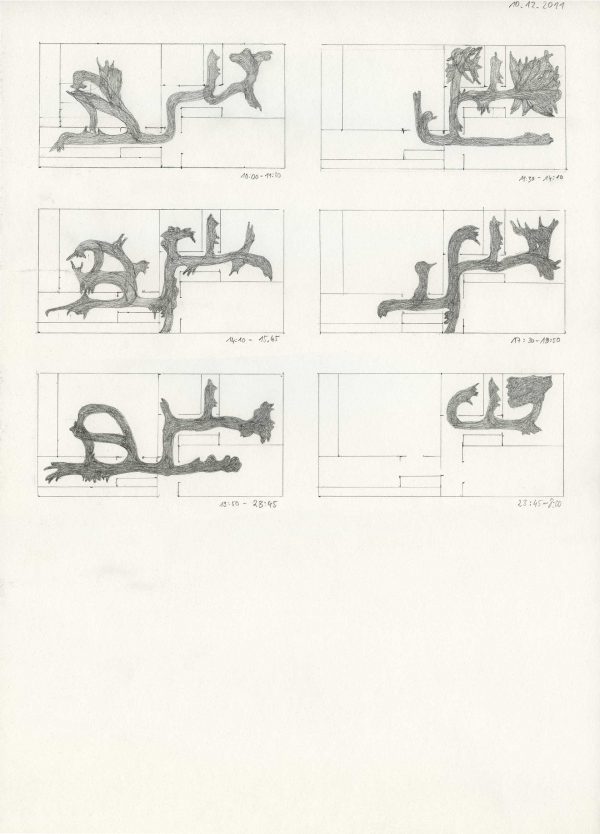
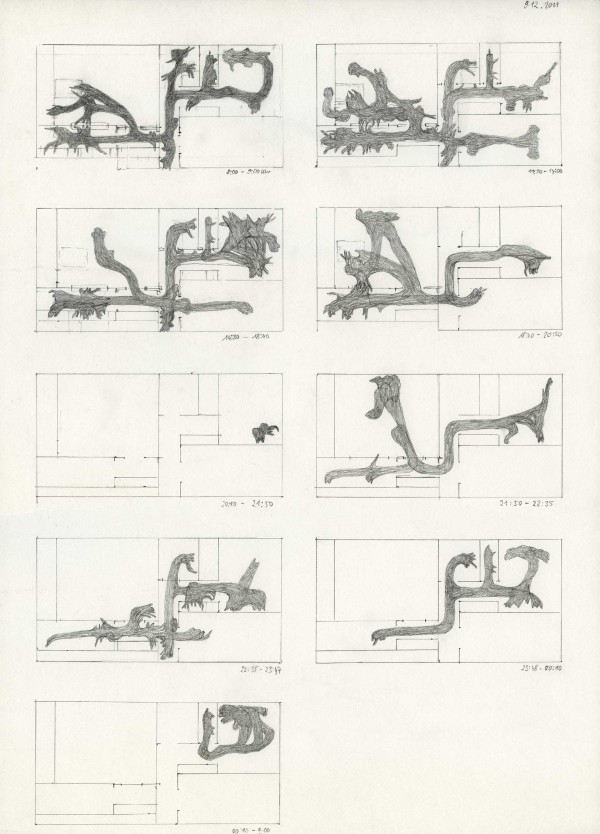
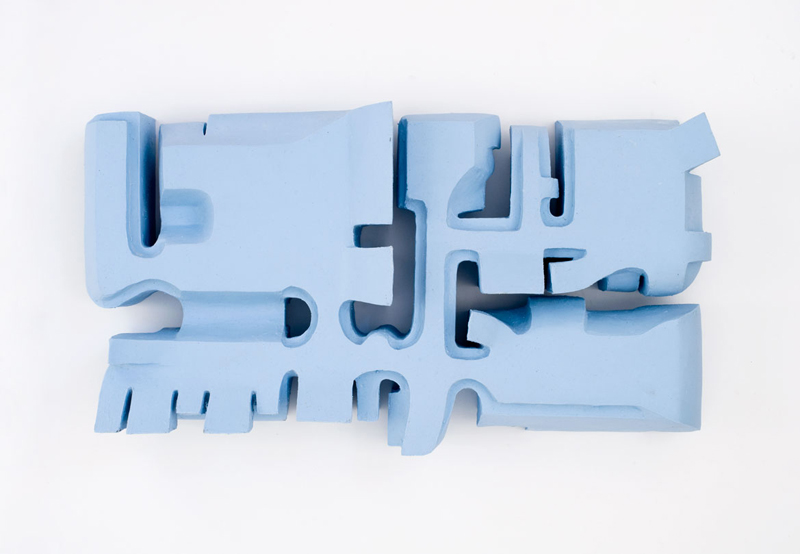
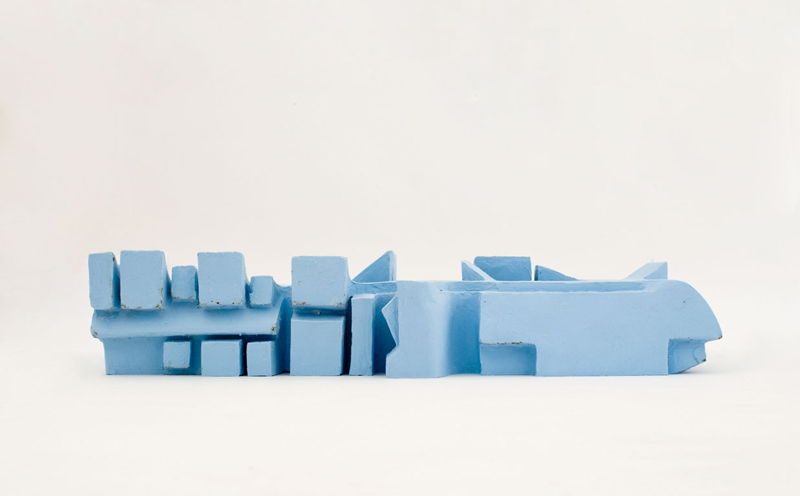
In her work, the German visual artist Simone Rueß investigates the structural dimensions of space as a product of human activity in drawings, objects, and installations. By capturing people’s personal and institutionally routinized paths of movement in their homes and in public spaces, she models and presents the invisibly constructed movement spaces and spatial relationships.
After observing and tracking her own movements and daily path between rooms and objects in her apartment, she drew a 3D ground plan of overlapping patterns of movement, tracing these movements based on how she »perceived« them. The movements became a body with soft round edges. How are we formed through the space we create and live in?
In further investigation of public space and its structures of movement, the artist revisited the central square of her hometown Ravensburg and observed the spatial network created by the city’s inhabitants, formed through their daily interactions with their environment. She transformed her observations into a stop motion animation that overlays these traces of movement to form a 3D object resembling a constantly changing crystal. By playing with different materials and aspects of movements in her exhibitions, the artist aims to involve the spectator in a dynamic exchange, confronting them with their own spatial perspective, making movement space accessible and tangible.
 Alliums Glossary