
initial notes on anatomy:
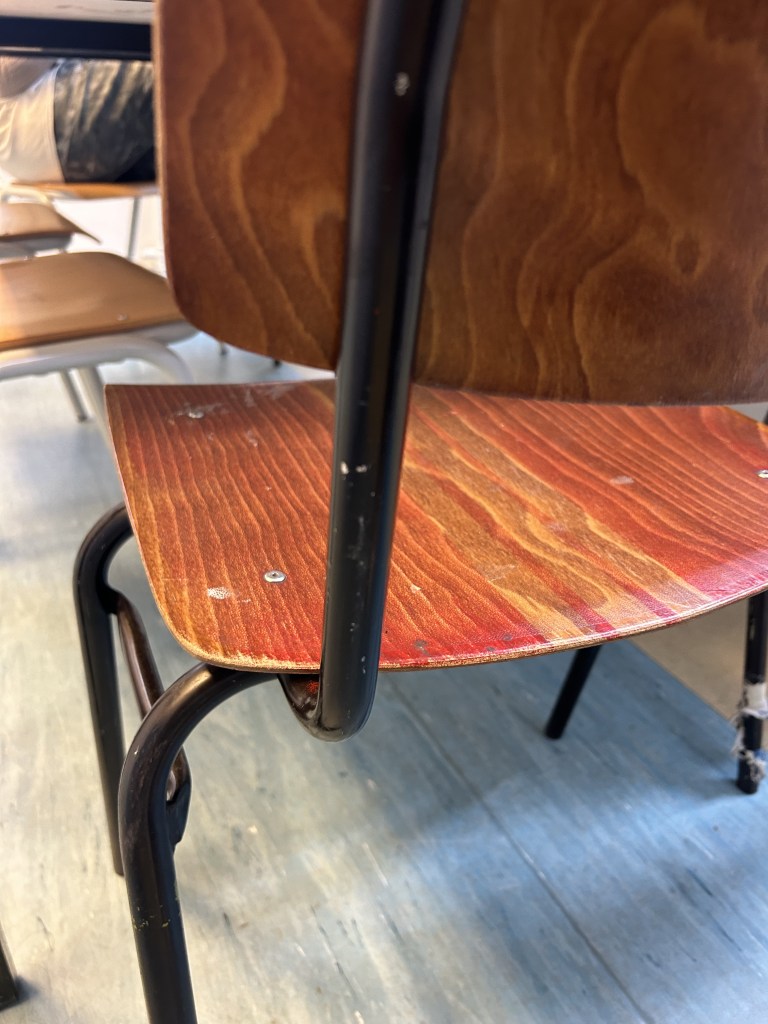
two sets of strong, durable legs, that lengthen into flat and firm feet, tube shaped.
a pelvis of welded steel, collarbone-like bits between, and a spine, non-flexible, curved up then down, meeting back up with the pelvis.
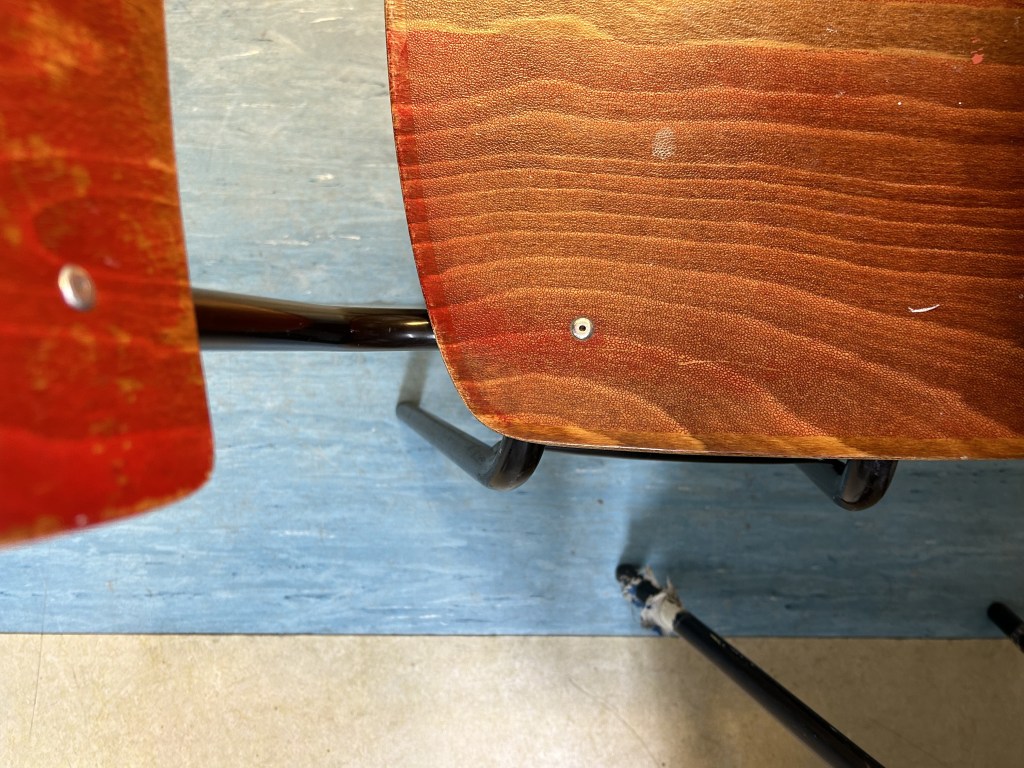
a torso and crotch of warm-toned, wood veneer, smooth to the touch, without muscle-tone, flattened.
initial notes on architecture:
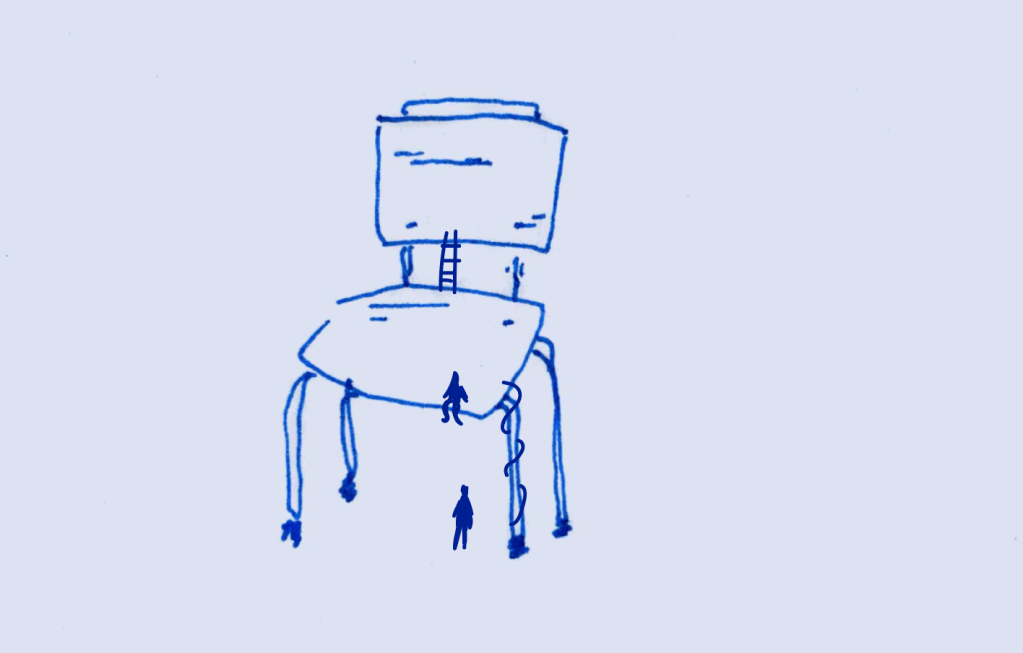
stands like a canopy, a gathering space outdoors, if it were bigger you could easily walk beneath it, perhaps climb the legs, and sit atop it. almost as if its size can be translated through scale.
If it were to keep its current size, i imagine it akin to a step on a stair; something to ascend or descend, or slide off of.
The steel is the skeleton, the structure; the wood veneer are walls / floors.
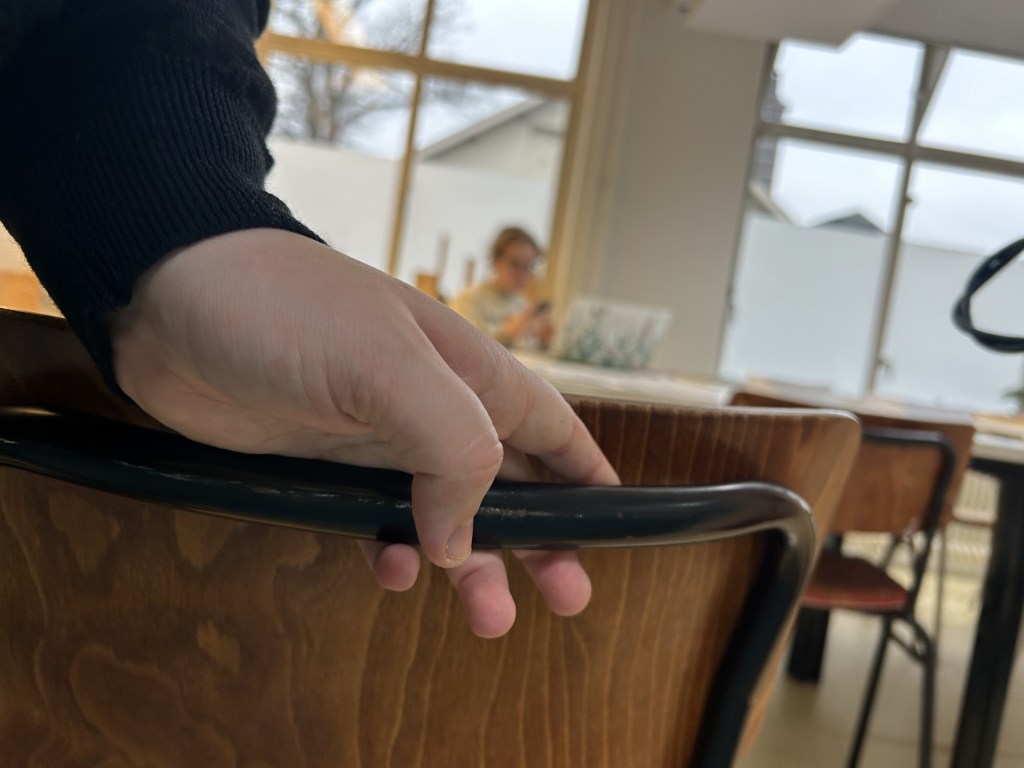
notes on anatomy after closed-eyed exploration:
Perhaps the two sets of legs are not two sets of legs after all ; maybe the bits in between them are more like shoulders; is it two arms, two legs instead? – what would that make the back support that goes up? A really big bum? perhaps two sets of limbs on a chair equal one of ours, and the chair simply misses a limb; then it might be one arm on the floor, one leg on the floor, one leg up?
notes on architecture after closed-eyed exploration:
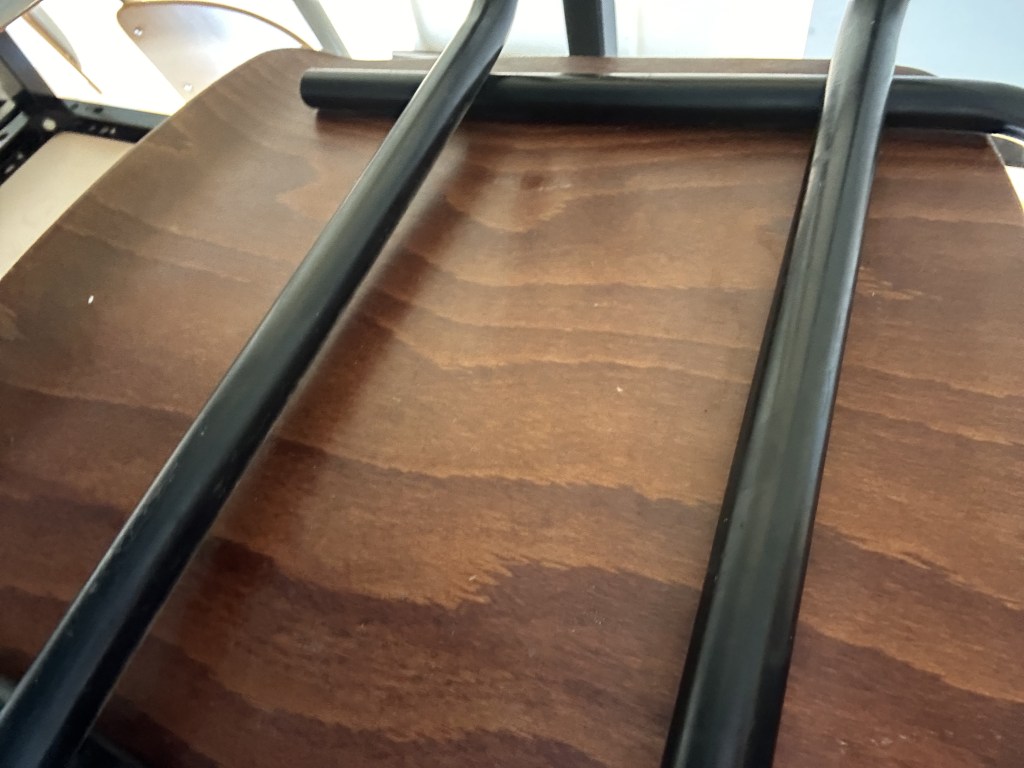
compared to my previous comments, i’ve changed my mind. it’s less like a stair, and much more like a slide, my body’s flexibility juxtaposed to its stagnant-ness, makes it curve around the structure almost snake-like. My hands trace the straight lines, but they are not straight at all. They curve ever so slightly, all the way on top it even forms a sort of handle; much like an overhang in a roof if it were covered with the same veneer.
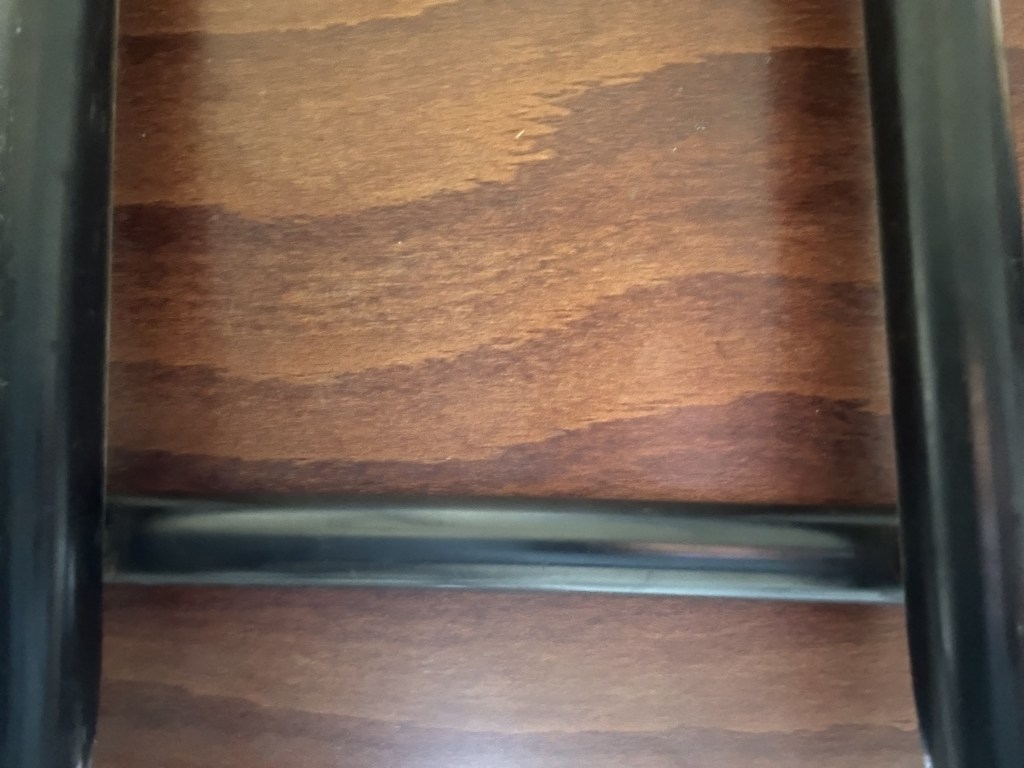
The screws feel like windows; the indents almost eluding to being hollow or open. On top of that, the gap between the seat and the back support, is similar to a big archway or open window.
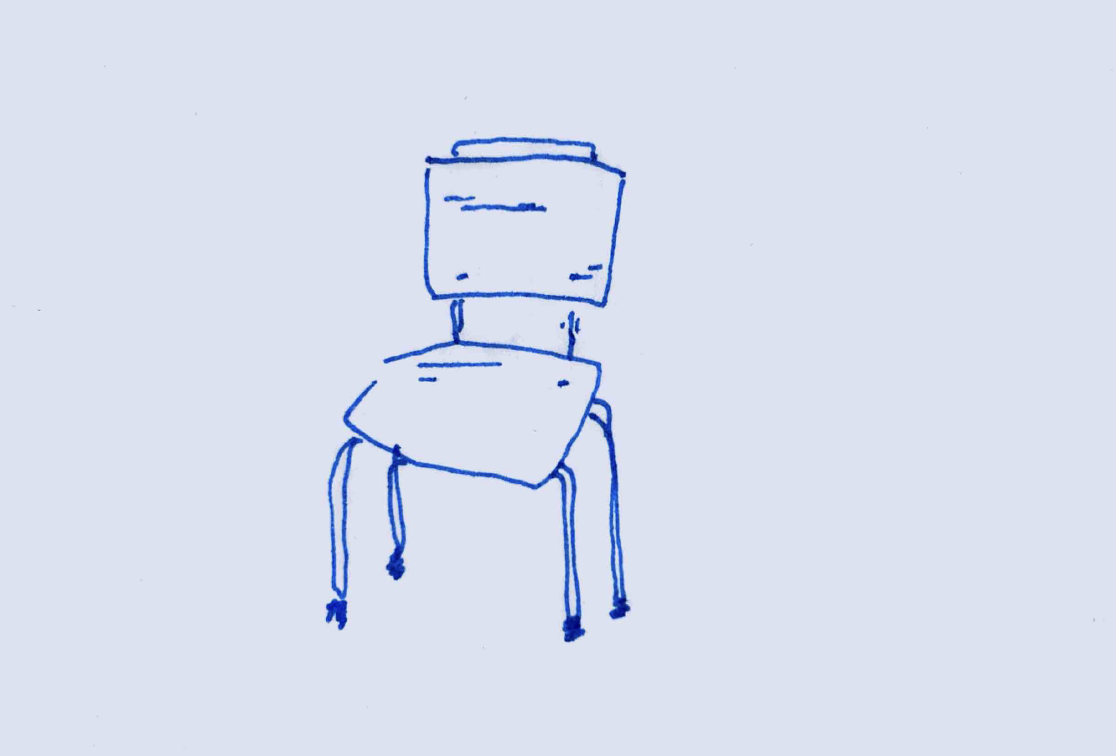
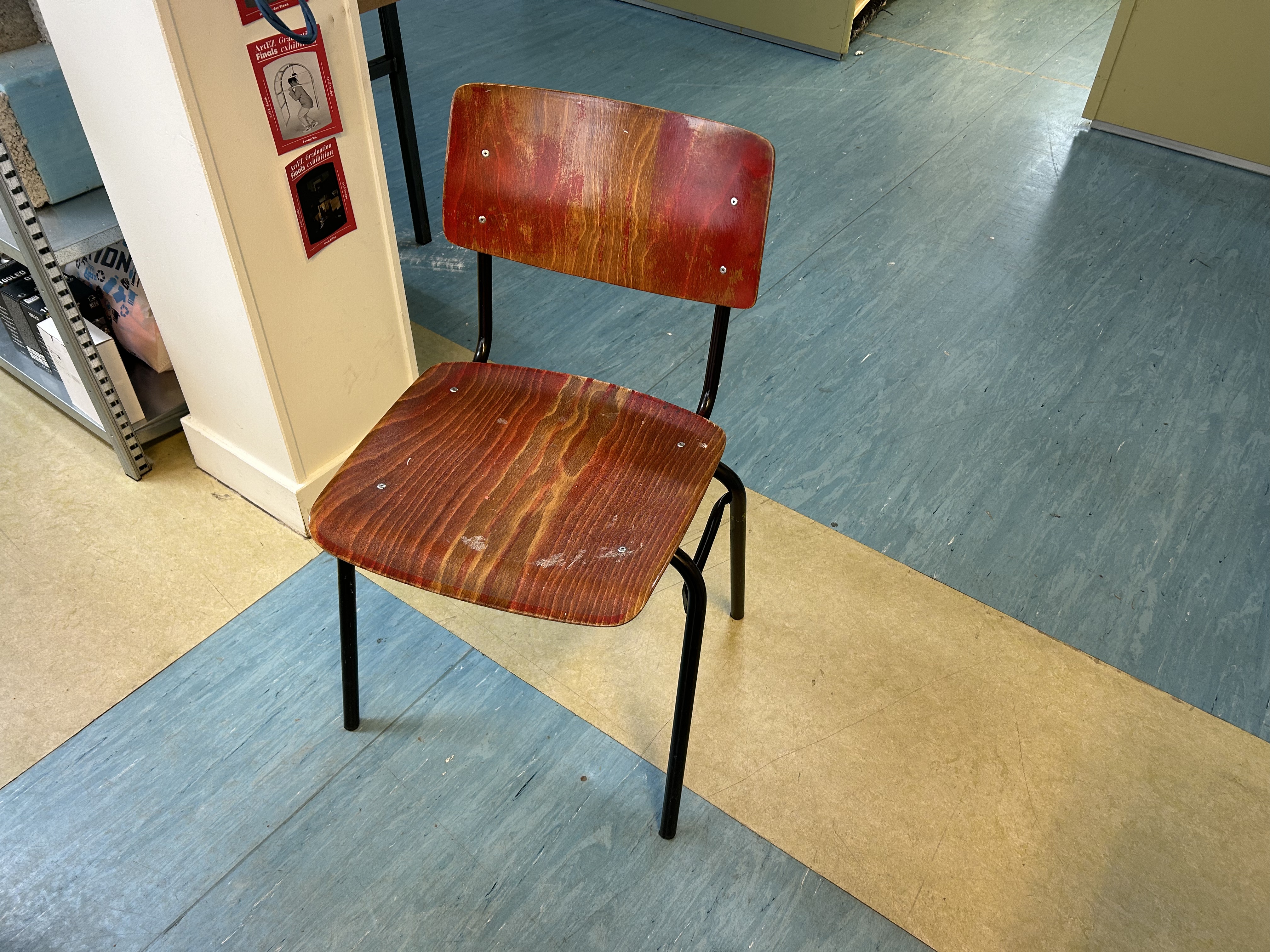
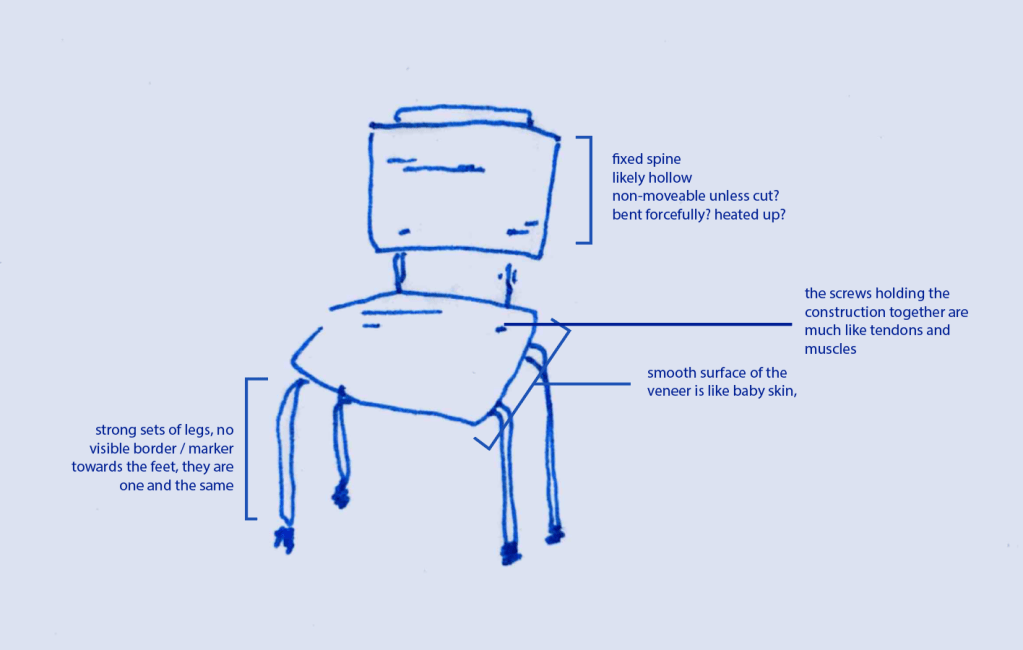
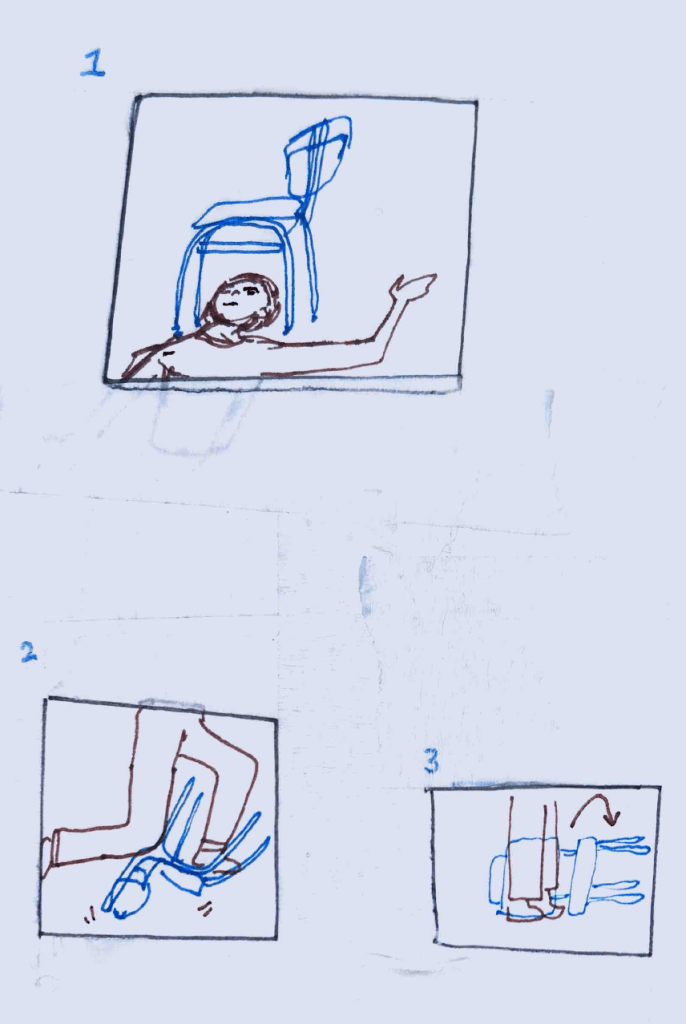
unconventional relationships between the chair and our body.
 Alliums Glossary